
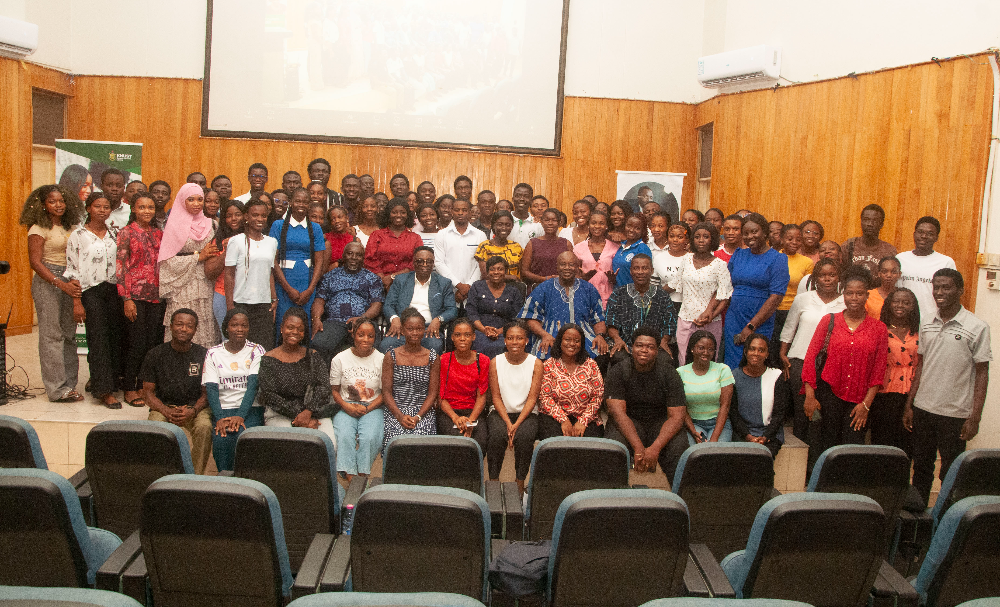
The Career Services Centre of the Kwame Nkrumah University of Science and Technology, Kumasi (KNUST), has held an industry engagement session for final-year students of the Faculty of Biosciences, offering guidance on career planning, industry expectations and the professional competencies required as they prepare to enter the workforce.

Director of the Career Services Centre, Mrs. Selina Angmor Doe, said the programme was organised to help students better understand the link between their academic training and opportunities in industry.
“We support them to set goals for their future,” she said, emphasising the importance of guiding students to make informed decisions about their career paths.
She said the session introduced students to professionals from organisations such as the Food and Drugs Authority (FDA) and the Council for Scientific and Industrial Research (CSIR), while also highlighting the range of career options available in their respective fields.
Mrs. Doe added that the session exposed students to emerging skills and competencies required in the job market, as well as the importance of continuous professional development.
“We are building their capacity and sharing insights into the industry with them,” she said. “We also give them options that are associated with the courses they are studying.”
Head of the Department of Biosciences, Professor Caleb Kesse Firempong, said the programme was aimed at bridging the gap between academic learning and industry practice by creating platforms for students to interact with experts and gain a deeper understanding of career opportunities.
He said such initiatives provide guidance beyond classroom learning, helping students develop the skills, mindset and networks needed to succeed in the job market.
“We want our students to be able to navigate their careers confidently,” he said. “These programmes help them understand the realities of the industry and prepare them to take the next steps in their professional journey.”
Chief Research Scientist and Acting Director at the Council for Scientific and Industrial Research, Professor Charles Tortoe, highlighted a wide range of ongoing projects, including food processing, engineering, product development and the incubation of dry foods such as cassava, yam, glucose and ethanol.
“We have technical services, laboratory analysis and contract research collaborations with both local and international organisations,” he said. “People can bring an idea to us, and as scientists, we work to develop it into a product that can thrive in the market.”
He encouraged students to explore indigenous crops and underutilised local foods, including fruits, vegetables and small fish found in their communities, noting that many possess unique health-supporting properties such as antioxidants.
“We are bringing these back to life and integrating them into the food industry,” he said.
Professor Tortoe said the unit also supports capacity-building through short training programmes designed to help students establish businesses in the food sector, covering areas such as value addition, marketing, food safety and processing of products including fruits, juices, jams, cocoa, chocolate and cereals.
“Start dreaming of the food products you want to develop,” he said. “Bring your ideas to research, and we will help you transform them into a business. Whether it is a sole venture or a collaborative startup, the opportunities are endless.”
He also outlined potential career paths in food technology, product development, food safety auditing, regulatory affairs, research science and entrepreneurship.
“You can be a technologist, a product development scientist, a public health specialist, or even a food entrepreneur,” he said.
According to him, the session underscored the importance of collaboration between research institutions and industry to ensure innovations are market-ready.
“When research meets industry, we create businesses. When it does not, opportunities are lost,” he said.
Chief Executive Officer of the Food and Drugs Authority, Mr. Roderick Kwabena Daddey Adjei, emphasised the need for strict adherence to hygiene, quality control and professional supervision in food production and sales, stressing that protecting public health must remain a top priority.
“A person should not manufacture or sell food unless it is done under the supervision of someone with the appropriate knowledge and qualifications who can ensure the purity, quality and wholesomeness of the food,” he said.
He highlighted the role of regulatory institutions in ensuring that food businesses operate within established safety standards.
“The authority’s responsibility is to provide and enforce standards for the sale of food and to ensure that adequate and effective systems are in place to regulate food, cosmetics and related products,” he said.
Mr. Adjei also stressed the importance of proper hygiene practices, safe food handling and effective documentation systems within food businesses, noting that record-keeping is essential for traceability and accountability.
“You must have proper documentation and record-keeping systems so that you can trace where your materials come from and ensure that the products you produce meet safety requirements,” he said.
Head of Foundation, Brand Communication and Public Relations at Blue Skies Products Limited, Mr. Alistair Djimatey, said Ghana possesses abundant agricultural resources that often go underutilised due to limited value addition and processing.
“It is about our inability to add value to the rich natural resources that nature has given to us,” he said. “If we begin to process what we produce, our fruits and other crops can create many opportunities for ourselves and our communities.”
He encouraged students to process agricultural produce promptly after harvest to maintain freshness and nutritional value, and to explore simple innovations that can transform everyday food items into commercially viable products.
“We need to start thinking about how we can organise and present our local products in a better way, whether in restaurants, small businesses or other food ventures,” he said.
He further advised students to build practical skills in food processing, marketing and entrepreneurship to enable them to turn ideas into viable businesses.
| Story: Alice Laura Kyerewaah Prempeh | Photos: Jonathan Gyepi-Attee |


